Home / Examples / Coupled Analysis / Electric-Fluid-Thermal Analysis [Coulomb/Bernoulli/Watt] / Example 1: Cooling of Strip Line by Natural Convection
A strip line is heated by current flowing through it. Heat dissipation of the strip line by the natural convection is solved in the steady-state analysis.
The current density, the temperature distribution, and the flow velocity vectors are solved
Unless specified in the list below, the default conditions are applied.
Item |
Settings |
Analysis Space |
3D |
Model Unit |
mm |
Item |
Settings |
Solver |
Electric Analysis [Coulomb] Fluid Analysis [Bernoulli] Thermal Analysis [Watt] |
Analysis Type |
Fluid Analysis: Steady-state Analysis Thermal Analysis: Steady-state Analysis |
Laminar Flow/Turbulent Flow |
Select Turbulent Flow |
Option |
Select Take into account buoyancy (Natural Convection) |
Layer Mesh Setting for Wall Surface (General Settings) |
Parameters for Automatic Creation Expected Temperature Difference: 10 [deg] |
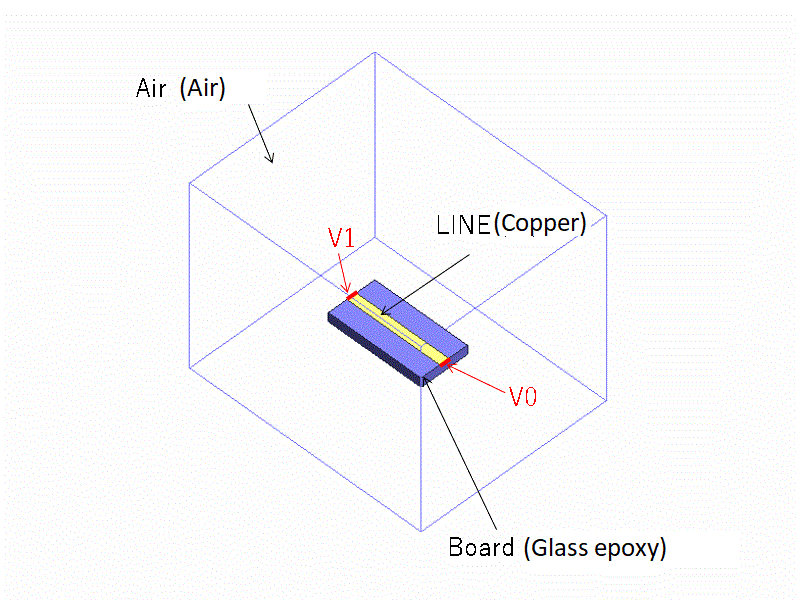
The model is a box solid body. The material is Air (000_Air).
Set Natural Inflow/Outflow for Inlet/Outlet with the outer boundary condition.
Inside the box, create a solid body of a substrate (Board) and a sheet body of a copper wiring (LINE).
Body Number/Type |
Body Attribute Name |
Thickness/Width |
Analysis Domain |
Material Name |
Mesh Size |
0/Solid |
Board |
- |
Solver: Deselect Electric Analysis (Coulomb) |
006_Glass_epoxy * |
General Mesh Size 1.0 |
1/Sheet |
LINE |
0.01mm |
- |
008_Copper (*) |
General Mesh Size 1.0 |
2/Solid |
air |
- |
Solver: Deselect Electric Analysis (Coulomb) |
000_Air * |
2.5 |
* Available from the material DB
Boundary Condition Name/Topology |
Tab |
Boundary Condition Type |
Settings |
Outer Boundary Condition |
Fluid-Thermal |
Inlet/Outlet |
Natural Inflow/Outflow Inflow Temperature: Direct Entry( 25 [deg]) |
V0/Edge |
Electric |
Electric Wall |
Electric Potential Specified, Waveform: Constant, Electric Potential: 0 V |
V1/Edge |
Electric |
Electric Wall |
Electric Potential Specified, Waveform: Constant, Electric Potential: 10 mV |
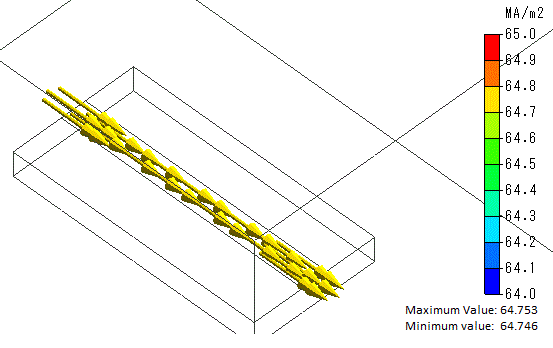
The vectors of the current density are shown below. The difference in electric potential causes a current to flow through the wiring.
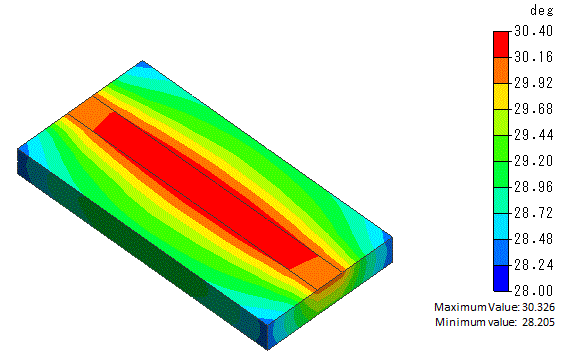
The temperature distribution is shown below.
For easy viewing of the temperature distributions of the substrate and the wiring, the ambient air field is hidden by right-clicking the air body and selecting [Hide body field].
The wiring is heated by a flowing current.
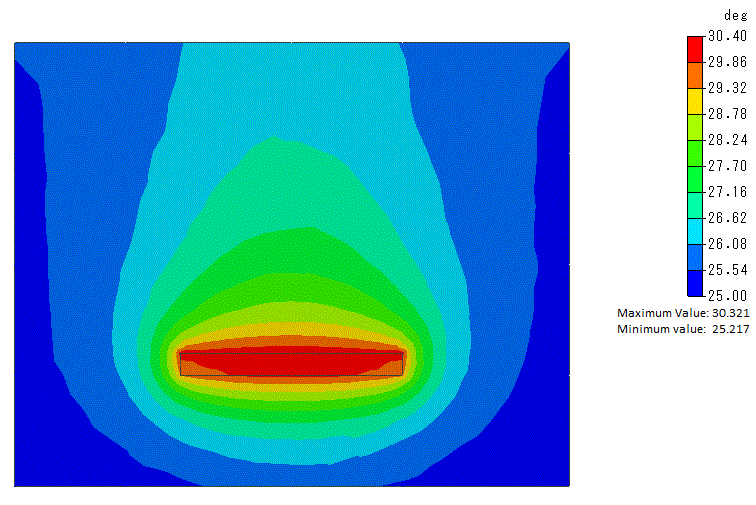
The section at y=0 is shown below. The air body is shown as well.
Heat upward transmission from the strip line can be observed.
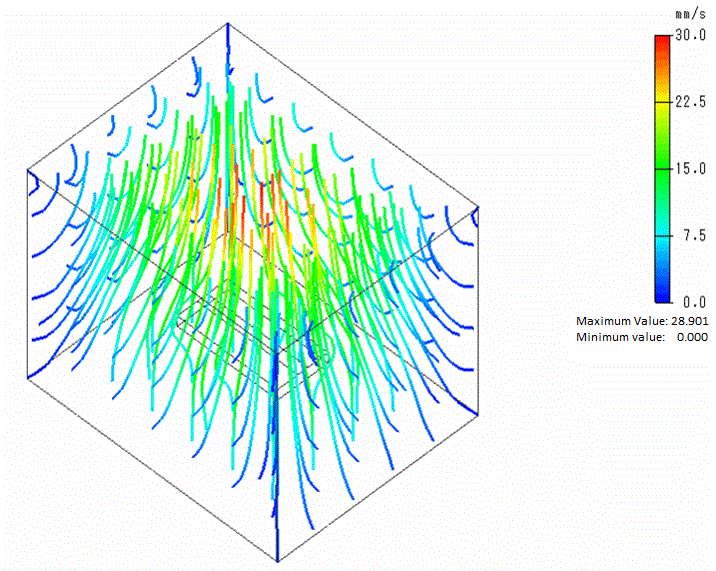
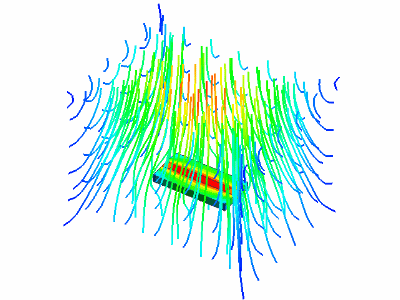
By switching the solver type from the thermal to fluid analysis, the flow velocity streamlines are shown as below.
The upward motion of air heated by the strip line can be observed.