|
Home / Examples / Coupled Analysis / Electromagnetic-Thermal Analysis [Hertz/Watt] / Example 2: Microwave Oven Transient Analysis
Example 2: Microwave Oven Transient Analysis
General
-
The heating of a piece of meat on the bone placed in a microwave oven is simulated.
-
It is solved by coupling the electromagnetic harmonic analysis and the thermal transient analysis.
-
The temperature-dependent relative permittivity and dielectric tangent are taken into account.
-
Unless specified in the list below, the default conditions are applied.
-
Obtain this session's project file. (Right-click and choose 'Save link as')
-
Results will vary depending on Femtet version and the PC environment.
-
This example is calculated using Femtet ver.2023.0.0.
Analysis Space
|
Item |
Settings |
|
Analysis Space |
3D |
|
Model Unit |
mm |
Analysis Conditions
|
Item |
Settings |
|
Solver |
Electromagnetic Analysis [Hertz] Thermal Analysis [Watt] |
|
Analysis Type |
Electromagnetic Analysis: Harmonics Analysis Thermal Analysis: Transient Analysis |
The harmonic analysis and the transient analysis are set as follows.
|
Tab |
Setting Item |
Settings |
||||||||||||||
|
Mesh |
General Mesh Size: |
40 |
||||||||||||||
|
Element Type |
2nd-order Element |
|||||||||||||||
|
Adaptive Mesh |
Off (to shorten the calculation time) |
|||||||||||||||
|
Frequency-Dependent Meshing |
Reference Frequency: 2.45x10⁹ [Hz] |
|||||||||||||||
|
Electromagnetic-Thermal Analysis |
Electromagnetic Analysis Type |
Harmonic Analysis |
||||||||||||||
|
Thermal Analysis Type |
Transient Analysis |
|||||||||||||||
|
Weight Function |
Select |
|||||||||||||||
|
Weight Function |
|
|||||||||||||||
|
Harmonic Analysis |
Frequency |
Minimum: 2.45×10⁹ [Hz] Maximum: 2.45x10⁹ [Hz] |
||||||||||||||
|
Input |
500 [W] |
|||||||||||||||
|
Transient Analysis |
Table |
|
||||||||||||||
|
Initial Temperature |
20 [deg] |
Model
The model is the same as that in the example 1.
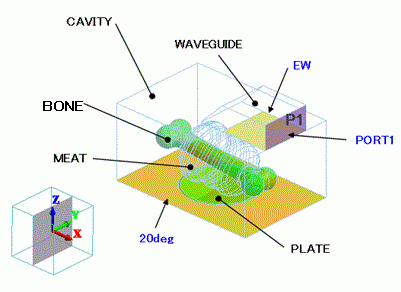
On the top of a cavity box, is placed a waveguide, into which electromagnetic waves enter. A port (PORT1) is set at the end of the waveguide.
A piece of meat on the bone is placed on a plate.
Body Attributes and Materials
|
Body Number/Type |
Body Attribute Name |
Material Name |
Mesh Size |
|
0/Solid |
CAVITY |
000_Air(*) |
|
|
5/Solid |
WAVEGUIDE |
000_Air(*) |
|
|
6/Sheet |
Imprinting body |
|
|
|
13/Solid |
PLATE |
PLATE |
10 |
|
75/Solid |
BONE |
BONE |
10 |
|
96/Solid |
MEAT |
WATER |
10 |
* Available from the material DB
|
Material Name |
Tab |
Value |
||||||||||||||||||||||||||||||||||||||||||||
|
PLATE |
Permittivity |
Relative Permittivity: 7.0 Dielectric Tangent: 0.0 |
||||||||||||||||||||||||||||||||||||||||||||
|
Thermal Conductivity |
1.5 [W/m/deg] |
|||||||||||||||||||||||||||||||||||||||||||||
|
BONE |
Permittivity |
Relative Permittivity: 7.0 Dielectric Tangent: 0.1 |
||||||||||||||||||||||||||||||||||||||||||||
|
Thermal Conductivity |
1.5 [W/m/deg] |
|||||||||||||||||||||||||||||||||||||||||||||
|
WATER |
Permittivity & Dielectric Tangent |
|
||||||||||||||||||||||||||||||||||||||||||||
|
Thermal Conductivity |
1.5 [W/m/deg] |
Boundary Conditions
|
Boundary Condition Name/Topology |
Tab |
Boundary Condition Type |
Settings |
|
PORT1/Face |
Electric |
Port |
Reference Impedance: [Use the characteristic impedance calculated from the port structure]. |
|
EW/Face |
Electric |
Electric Wall |
|
|
Outer Boundary Condition |
Electric |
Electric Wall |
|
The default setting is [Magnetic Wall] for the electric boundary, and [Adiabatic] for the thermal boundary.
Results
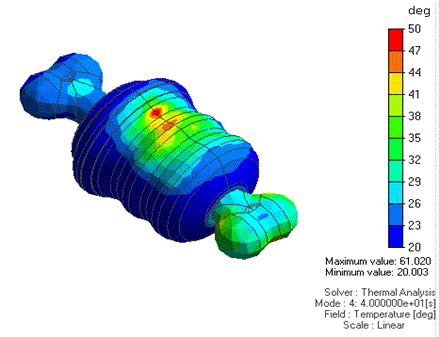
The temperature inside the meat can be observed to rise and fall according to the weight function of the input power of electromagnetic waves.
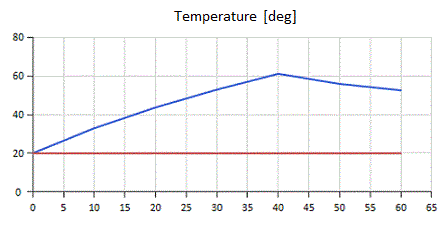
The contours of temperature after 40 sec represent the temperature distribution inside the meat.