
| General | An ultrasonic horn is a resonant component that delivers the optimum frequency and amplitude to plastic parts to be welded. The horn must be designed to resonate properly at the operating frequency. In this example, a harmonic voltage is applied to an ultrasonic transducer (piezoelectric element) while part of the transducer is fixed. The analysis investigates the frequency at which the best resonant condition is obtained. |
|---|---|
| Analysis Model | The analysis model consists of an ultrasonic transducer, in which a piezoelectric material is sandwiched between electrodes, and an ultrasonic horn. The outer circumference at the base of the horn is fixed, and a voltage is applied to the piezoelectric element to excite vibration. Resonance analysis is used to evaluate the resonant frequencies and vibration modes. Harmonic analysis is then performed to evaluate the displacement at the horn tip under an applied AC voltage for each frequency. |
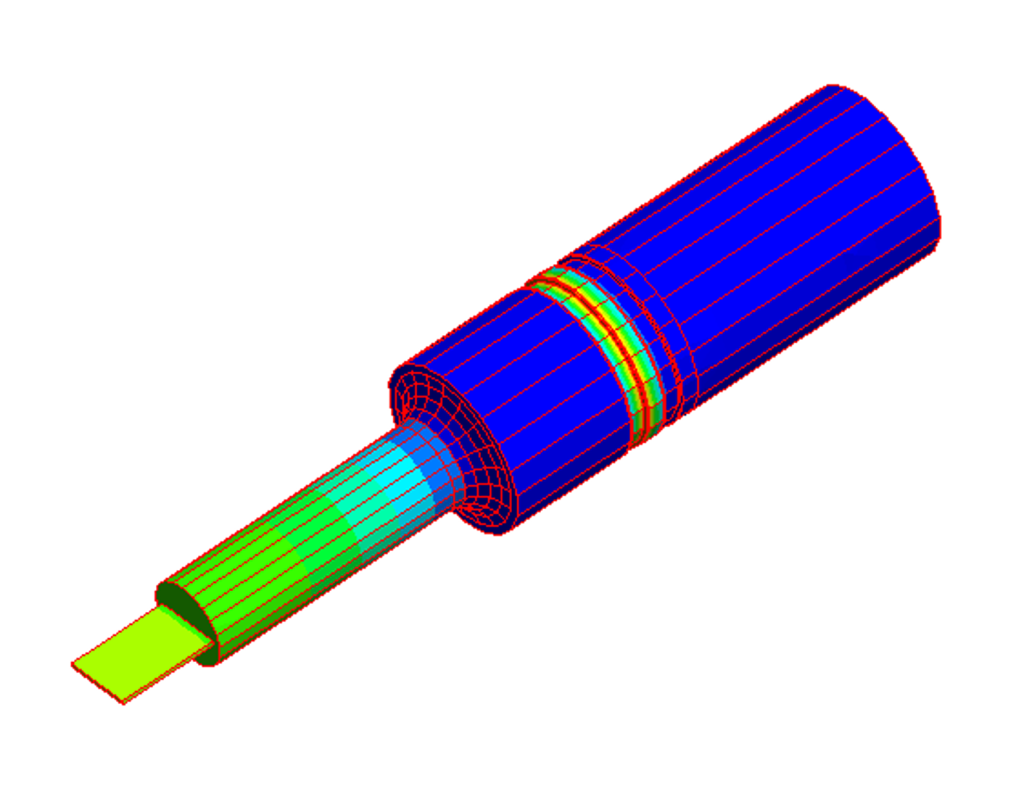
| Result | The resonance analysis showed a mode near 33.7 kHz in which the horn tip vibrates significantly in the Z-direction. Next, harmonic analysis was performed to evaluate the Z-direction displacement of the horn tip as a frequency response. The results confirmed that the Z-direction displacement response of the horn tip becomes large near 34 kHz. By combining resonance analysis and harmonic analysis, the resonant frequency, vibration mode, and tip amplitude of an ultrasonic horn can be evaluated during the design stage. |
| Keywords | Ultrasonic horn, ultrasonic welding, plastic welding, welding equipment, resonant frequency, frequency response |
Fig.1 Simulation Model
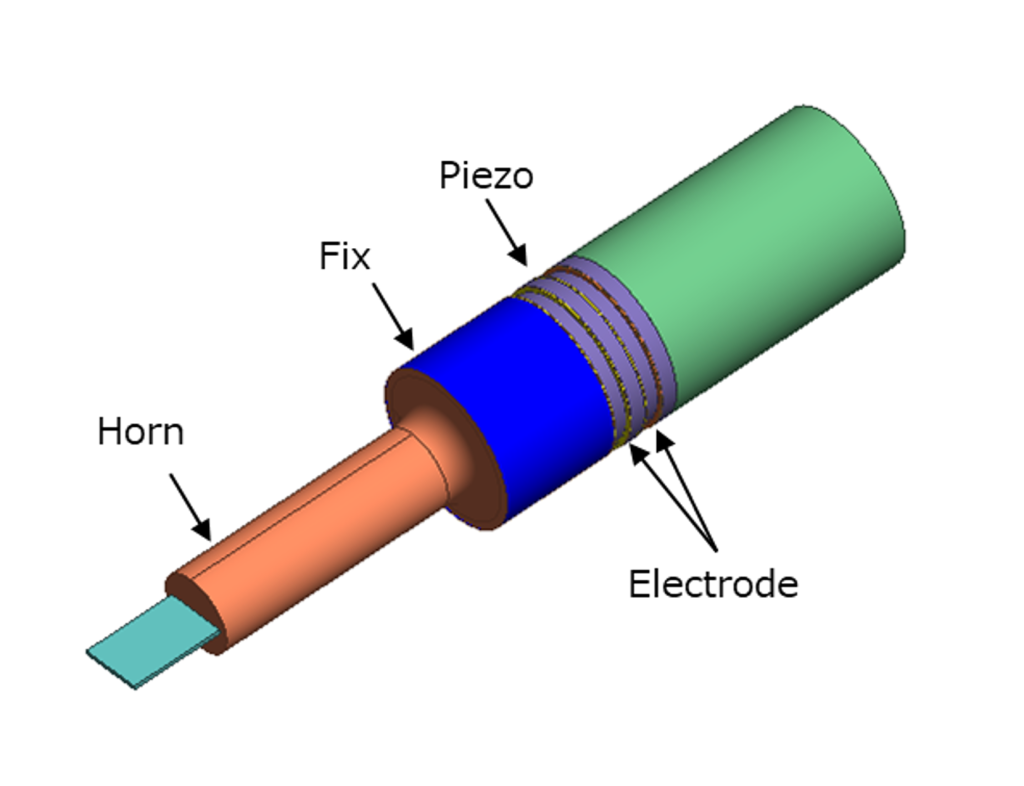
Fig.2 Relative Displacement Countor Plot and Deformed Shape(Resonant Analysis)
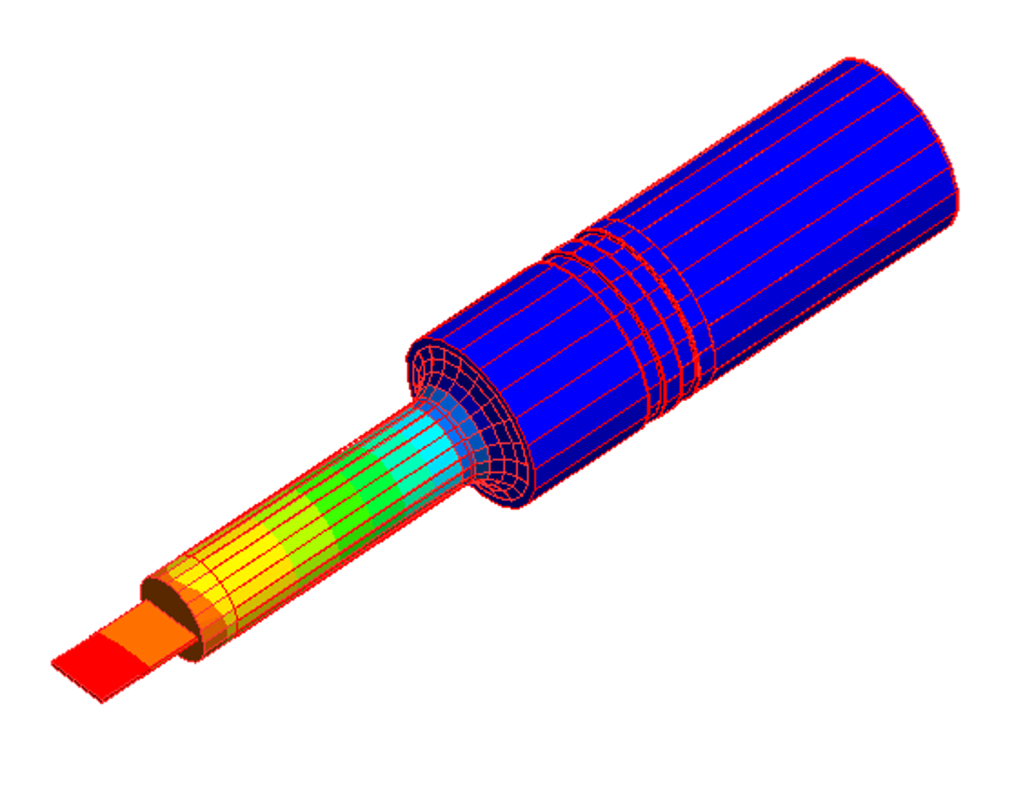
Fig.3 Frequency Response
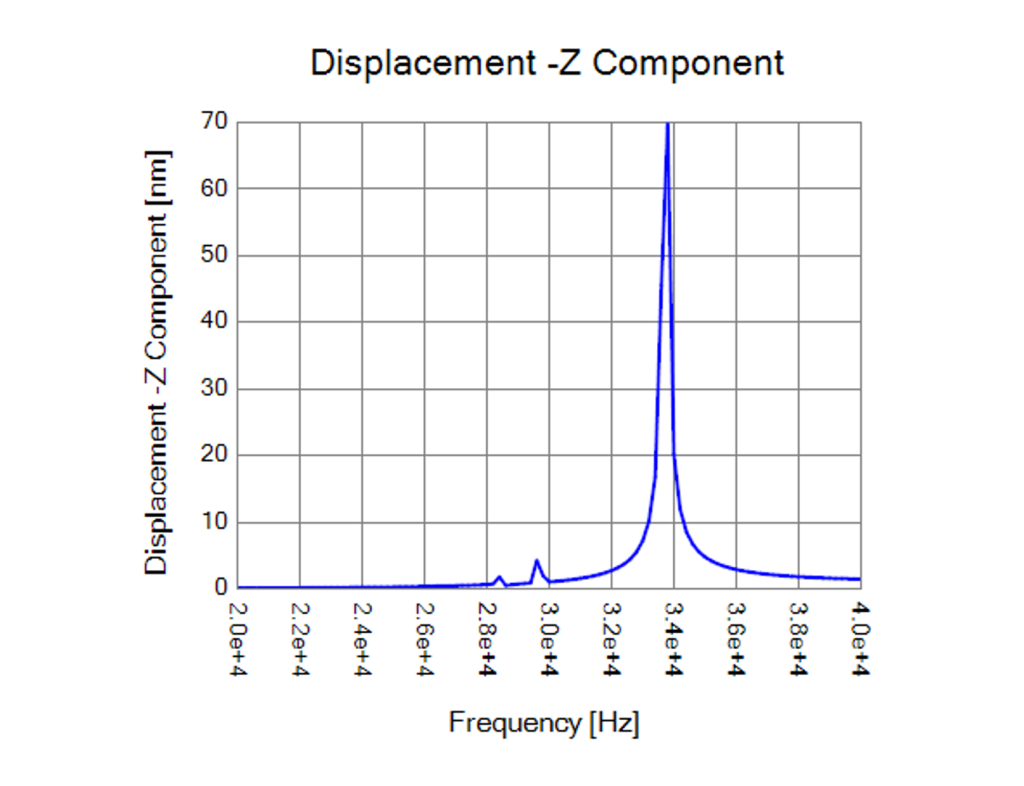
Fig.4 Contour Plot of Z-Direction Displacement(Harmonic Analysis)