CAE Software【Femtet】Murata Software Co., Ltd.

- Top
- Product<
- Applications
- Deriving a DELPHI Model (1D Thermal Analysis Model) Using the Femtet Macro
Application41 Deriving a DELPHI Model (1D Thermal Analysis Model) Using the Femtet Macro
General
DELPHI model represents the thermal characteristics of an electronic device by thermal equivalent circuit without disclosing proprietary information such as semiconductor structures and material properties.
This example explains how to create the DELPHI model automatically from the Femtet model by a macro.
Explanation
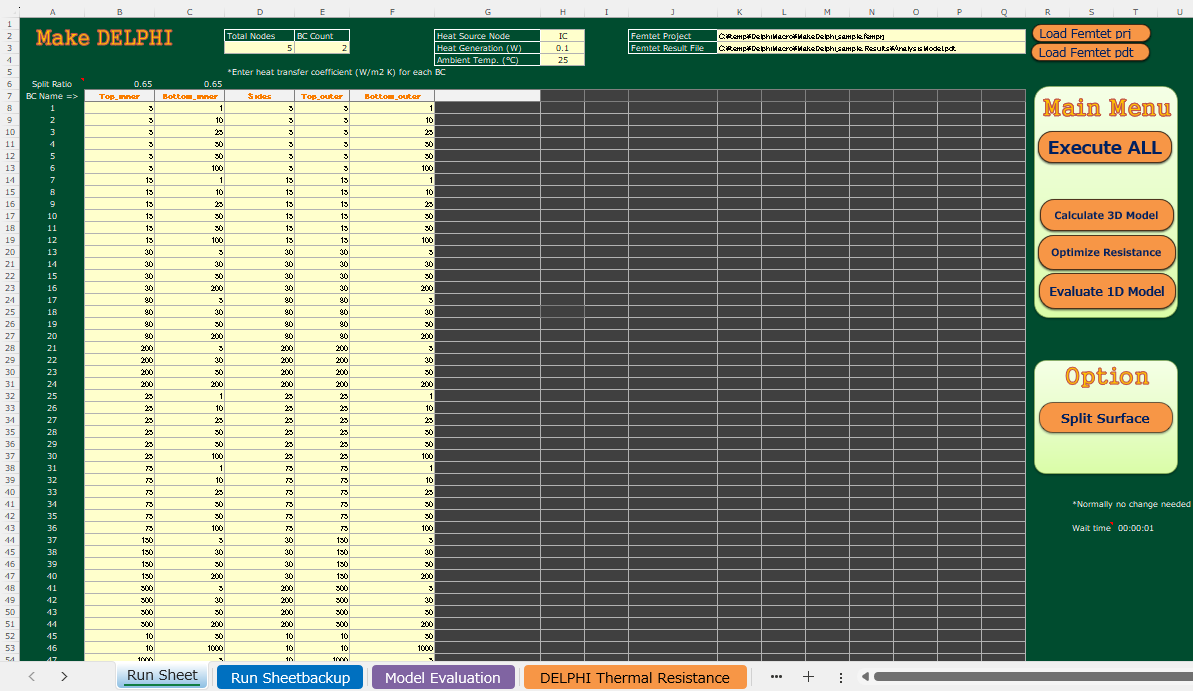
FIG.1 shows the interface of the Femtet macro.
To create a DELPHI model, the Femtet macro automatically performs three procedures:
Step 1: Perform 3D thermal analysis,
Step 2: Optimize the thermal resistance of the DELPHI model,
Step 3: Compare the 3D thermal analysis model and the DELPHI model.
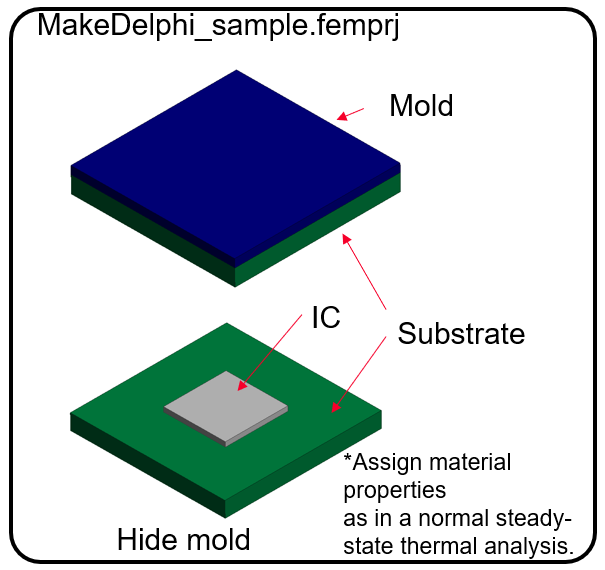
In Step 1, the 3D thermal model shown in Fig. 2 is analyzed with conditions such as natural convection, forced convection, and heatsink cooling taken into account. The result data required for creating the DELPHI model is extracted.
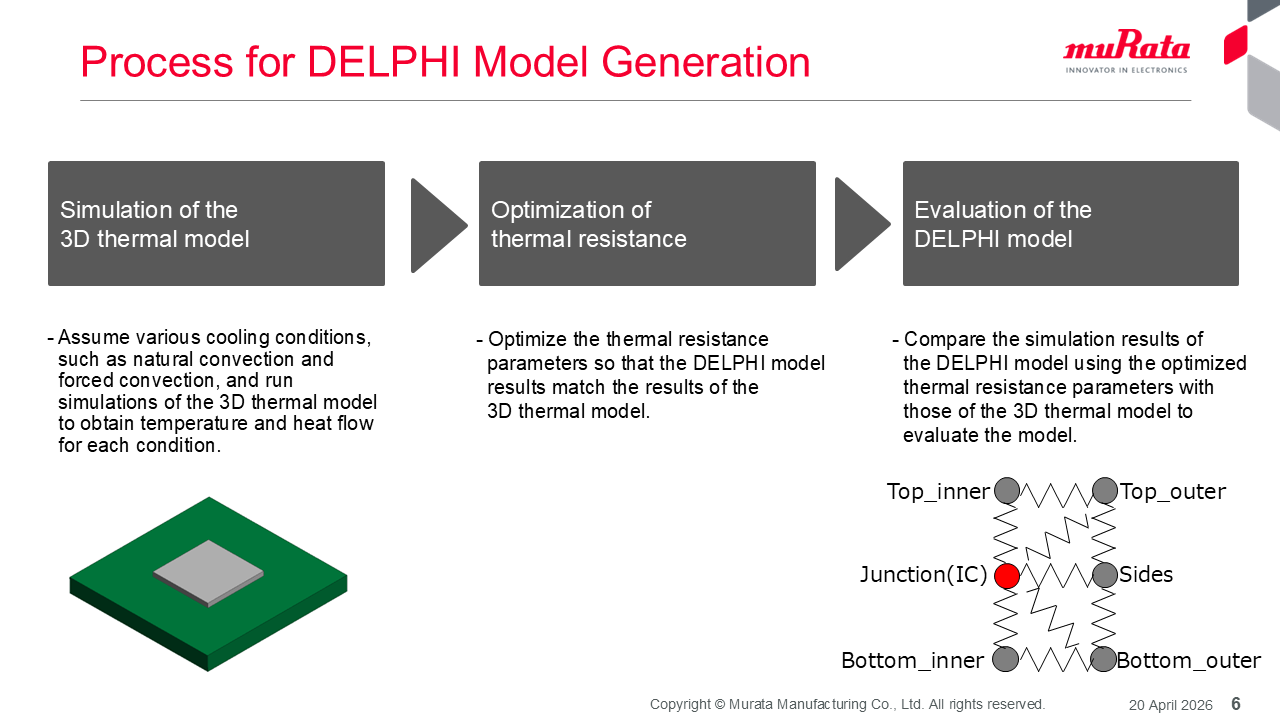
In Step 2, the thermal resistance of the DELPHI model is optimized as in Fig. 3 such that the results of the analysis model and the DELPHI model become equal.
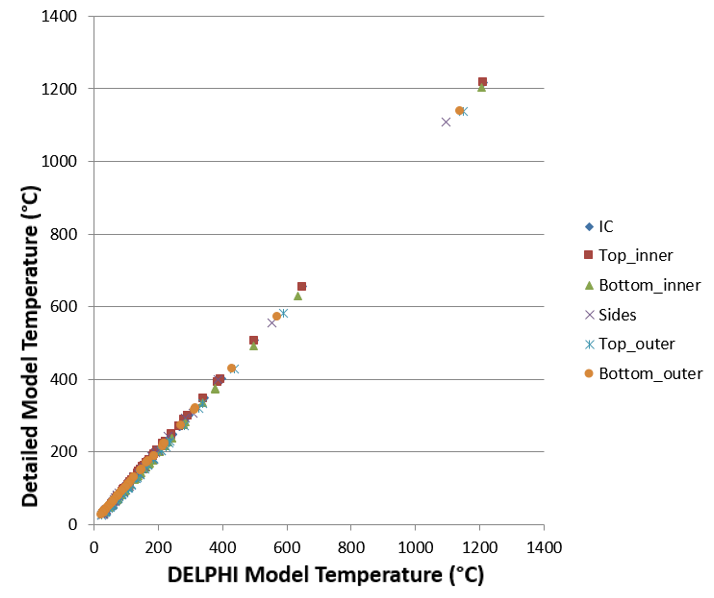
In Step 3, the result of the DELPHI model given by optimizing thermal resistance and that of the Femtet model are shown graphically for comparison as in Fig. 4. It allows you to verify the accuracy of the DELPHI model.
In this way, the Femtet macro helps you to automate complicated procedures of obtaining the DELPHI model based on the 3D thermal analysis model.
Please see Macro Samples where you can download a macro for this example.
Source: Murata Manufacturing Co., Ltd.